Industrial and Warehouse
Machinery injuries, crush incidents, falls from height, forklift and loading dock accidents. Often high-volume, frequently involving equipment that must be decontaminated before returning to service.
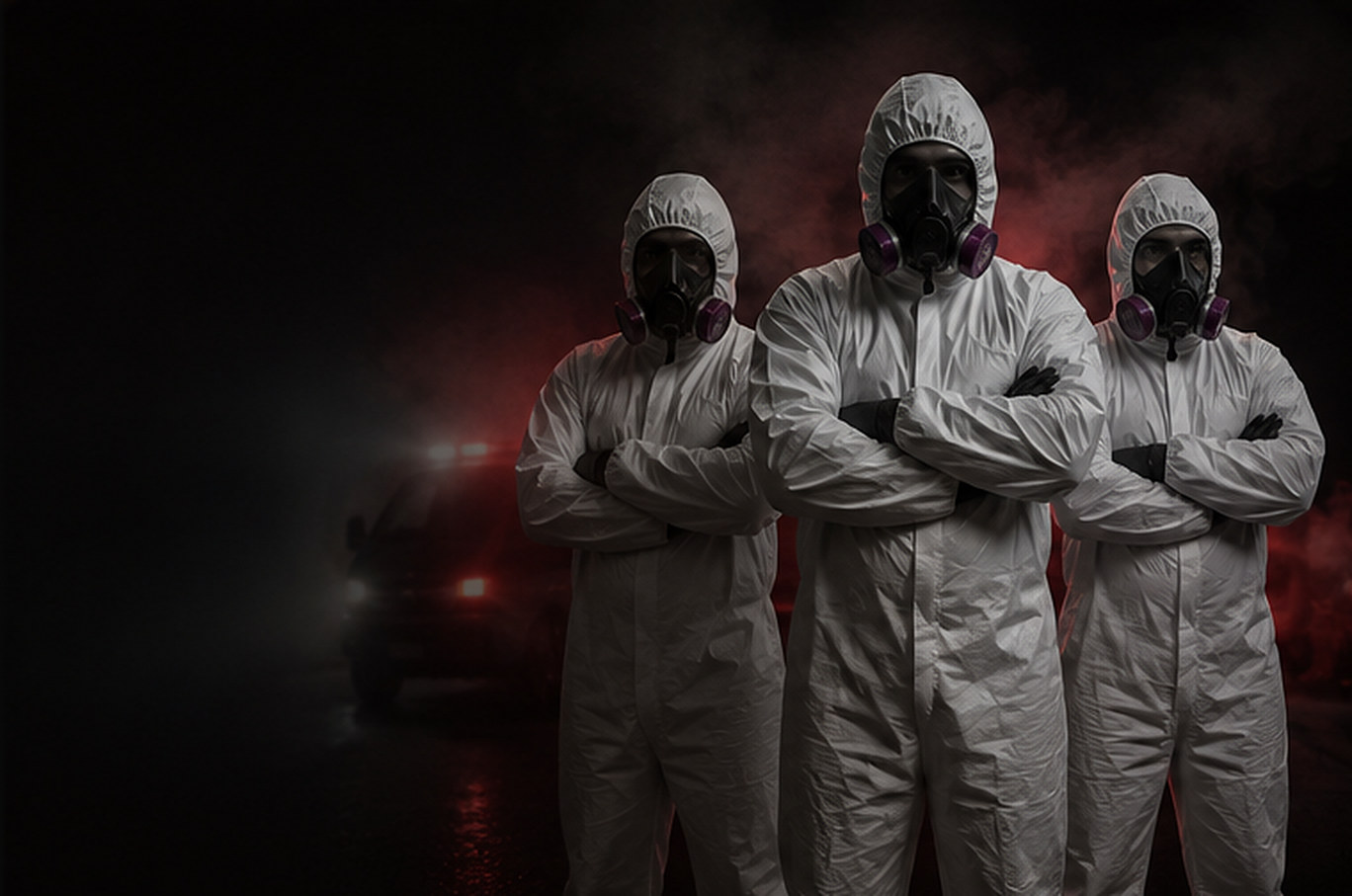
Trauma scene and accident cleanup across Nassau, Suffolk and NYC. A serious accident does not end when the ambulance leaves, and what is left should not fall to the employee who witnessed it.
24/7 response for workplaces, industrial facilities, schools, vehicles and homes.
The overwhelming majority of trauma calls involve no criminal element. They are accidents and medical events, and they happen in places full of people who have to go back to work.
Machinery injuries, crush incidents, falls from height, forklift and loading dock accidents. Often high-volume, frequently involving equipment that must be decontaminated before returning to service.
Falls, tool and equipment injuries, and site incidents that halt work until the area is cleared.
Collisions on private property, fleet accidents and any vehicle requiring biohazard decontamination before it can be driven or sold.
Cardiac events, seizures, severe lacerations and falls in offices, retail floors and commercial kitchens, often in front of staff and customers.
Incidents in school buildings, gyms, campuses and municipal properties, where remediation must be documented before reopening.
Falls on stairs, kitchen and workshop accidents, and medical emergencies involving elderly residents.
When a serious injury happens at a place of business, whoever is responsible for the site is suddenly holding three competing problems.
Contaminated material is a regulated hazard. Employers with staff who may have occupational exposure fall under OSHA 29 CFR 1910.1030. Handing a mop to whoever is nearest creates a second incident.
The area is unusable, and possibly the whole facility with it. Every hour costs money, and there is pressure to reopen before it is appropriate.
The staff who saw it are still on your payroll. Sending them back past a visible reminder turns one bad day into a retention problem.
Reconstruction of the affected area often matters more to a workforce than the technical decontamination does.
We can only solve the first two directly. But solving them properly, including rebuilding and repainting the area so it does not look like the site of an accident, is a significant part of solving the third.
Employers consistently underestimate how strongly staff react to returning to a space where they witnessed a serious injury, particularly when visible reminders remain.
Overnight and weekend scheduling available so your facility opens on time.
Call 855-379-4866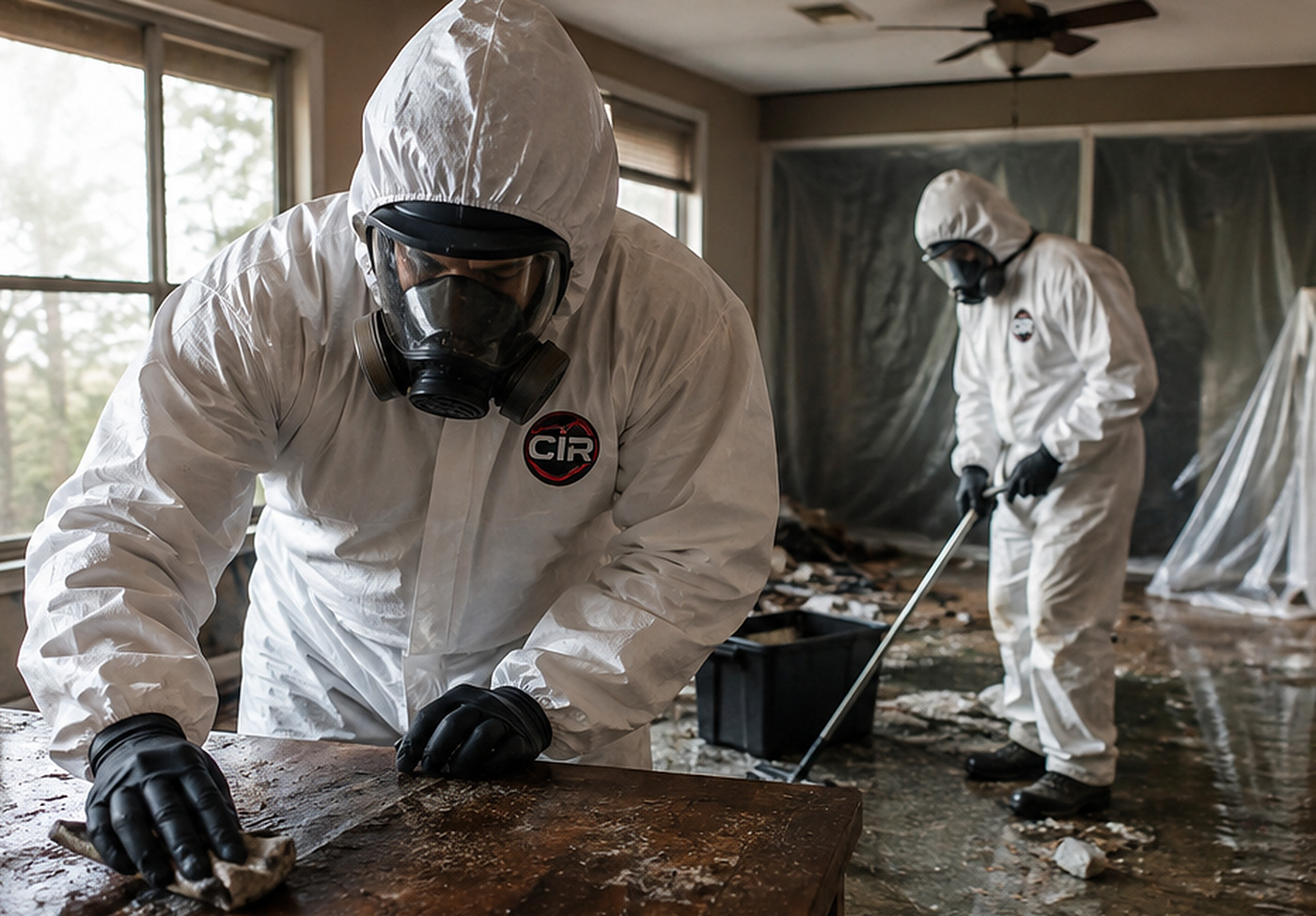
Crews work around your operation, including overnight
This is not a service we can sell you, but it is the part most often overlooked.
People who witnessed a serious injury are affected in ways that surface days and weeks later rather than immediately. Employers who make support available, and who ensure nobody walks past a visible reminder of the incident, have an easier time afterward than those who treat it purely as a facilities problem.
Many employers have an Employee Assistance Program that includes critical incident support and never think to activate it. If yours does, this is what it is for.
Our contribution is narrower: when people come back, the space does not look like anything happened there.
Crews stage from central Long Island, so most addresses in Nassau, Suffolk and NYC are reachable quickly at any hour. Below are the communities we are called to most often.
Do not see your town? We cover the entire island, from the Queens border to Montauk and Orient Point, plus all five NYC boroughs.
Call 855-379-4866Call and we will build the response around your operation.
855-379-4866Mostly context. The hazards and methods overlap heavily, but a trauma scene usually involves no crime and no investigation, so no agency is holding the property and work can often begin immediately. The pressure is about reopening a space rather than waiting on a release.
Faster than most people assume if we are called early. Many workplace trauma scenes are remediated and verified within a single shift. We routinely schedule overnight so a business opens on time the next morning.
Once remediation is verified complete, the area is safe to occupy. Whether your people are ready is a separate question. Reconstruction of the affected area, meaning new flooring and fresh paint, often matters more to a workforce than the technical decontamination does.
That depends on the incident and your industry, and it is a question for your safety officer or counsel. What we can tell you is that the Bloodborne Pathogens Standard governs how contaminated material is handled afterward, and having untrained employees clean a coworker's blood is a compliance exposure.
Yes. Personal and commercial vehicles, fleet equipment, parking structures and private roadways. Public roadway work is coordinated through the relevant agency.
Almost always, and it is usually the better option. Overnight and weekend scheduling minimizes disruption and keeps the work out of view of staff and customers.