Homes
Falls on stairs, kitchen and workshop accidents, medical events, and injuries involving elderly residents on blood thinners, where a minor cut produces a significant volume.
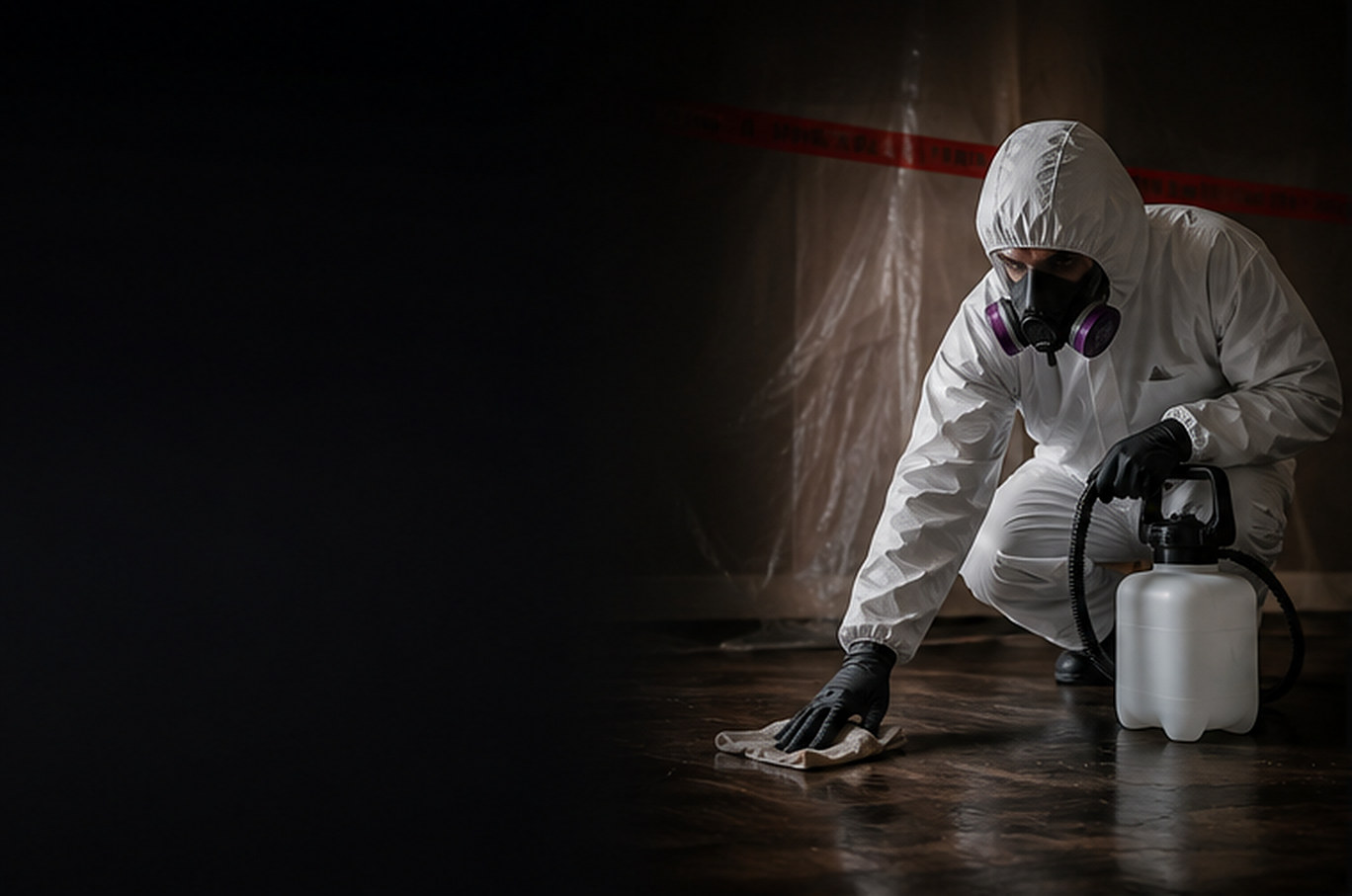
Blood cleanup and bodily fluid remediation across Nassau, Suffolk and NYC. Most calls involve no crime at all: a fall, a medical episode, a workplace injury. It needs remediation, not a mop.
24/7 response for homes, businesses, rental units and vehicles anywhere on Long Island.
Two things separate blood cleanup from any other kind of cleaning, and both are invisible.
Blood can carry hepatitis B, hepatitis C and HIV. Some of these pathogens stay viable on surfaces long after the blood has dried and stopped looking like blood.
A stain on a carpet is often a saturated pad, a soaked subfloor and contamination three feet from anything visible.
Effective remediation means finding the true boundary of the contamination, removing every porous material inside it that cannot be verifiably cleaned, and disinfecting what remains. That requires moisture detection, the willingness to open a floor and licensed disposal channels.
Porosity drives scope and cost more than volume does.
| Material | Typical outcome |
|---|---|
| Sealed tile, porcelain, glass | Cleaned in place; grout needs separate attention |
| Stainless steel, painted metal | Cleaned in place |
| Finished hardwood | Cleanable if caught before penetration through the finish |
| Vinyl and sheet flooring | Cleanable where seams and edges are intact |
| Carpet and padding | Removal, essentially always |
| Plywood or OSB subfloor | Removal once saturation reaches it |
| Drywall and insulation | Removal |
| Upholstery, mattresses, foam | Removal |
| Particleboard cabinetry | Removal |
We do not remove material to inflate an invoice, and we do not leave contaminated material in place to keep a number low. You see the reasoning before anything is cut.
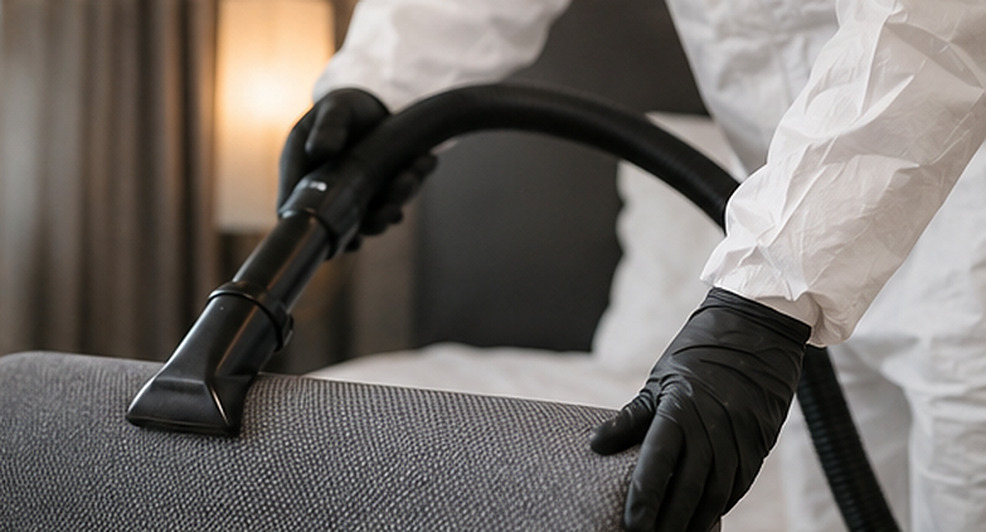
Falls on stairs, kitchen and workshop accidents, medical events, and injuries involving elderly residents on blood thinners, where a minor cut produces a significant volume.
Machinery injuries, warehouse and loading dock accidents, kitchen lacerations, and medical emergencies in front of staff and customers.
Incidents in apartments and multi-family buildings, where contamination can pass through a floor assembly into the unit below.
Personal cars, fleet vehicles, rideshare vehicles and work trucks, where fluids reach seat foam, floor pans and ventilation.
Schools, gyms, medical offices, hotels and restaurants that need to reopen quickly and safely.
Driveways, walkways, stairwells and parking structures, including porous concrete that holds contamination in its surface.
A spill addressed within hours is usually a surface job. The same spill a week later means removing flooring and subfloor.
Everything removed is treated as regulated medical waste. Materials are bagged in approved containers inside containment, then sealed, labeled and transported through licensed disposal channels rather than placed in your dumpster. New York regulates this handling and transport.
You receive documentation of what was removed and how it was disposed of. For a business, that record is part of your compliance file. For a homeowner, it supports your insurance claim.
Related: biohazard cleanup and remediation, or trauma scene cleanup.
Crews stage from central Long Island, so most addresses in Nassau, Suffolk and NYC are reachable quickly at any hour. Below are the communities we are called to most often.
Do not see your town? We cover the entire island, from the Queens border to Montauk and Orient Point, plus all five NYC boroughs.
Call 855-379-4866The sooner blood is properly addressed, the smaller and less expensive the job becomes.
855-379-4866We strongly advise against it. Household bleach is unreliable against dried organic material and is deactivated on contact with the protein in blood. Mopping drives contamination deeper into porous surfaces and spreads it wider, while exposing you to a bloodborne pathogen risk without protection.
Much farther than the visible stain. On carpet it reaches the pad within minutes, then the subfloor, then along subfloor seams, sometimes through to joists and the ceiling below. On tile it moves through grout. Against a wall it runs behind the baseboard.
Volume is a poor proxy for risk. Hepatitis B can remain viable on surfaces at room temperature for an extended period, and infectious material does not have to be visible to be present. What matters is which surfaces it reached and how porous they are.
Yes. Vehicles are complicated because fluids reach seat foam, carpet underlay, seat rails and ventilation. We handle personal, fleet and commercial vehicles.
Employers whose staff can reasonably be expected to have occupational exposure to blood fall under OSHA 29 CFR 1910.1030, covering exposure control planning, training and protective equipment. Directing an untrained employee to clean a coworker's blood is a compliance and liability problem.
Quickly. Blood penetrates porous materials immediately and keeps migrating while liquid. A spill addressed within hours is often a surface job. The same spill a week later usually means removing flooring and subfloor.