Homicide and Shooting Scenes
Larger scenes, longer investigative holds, chemical agents and multi-room contamination.
Homicide cleanup →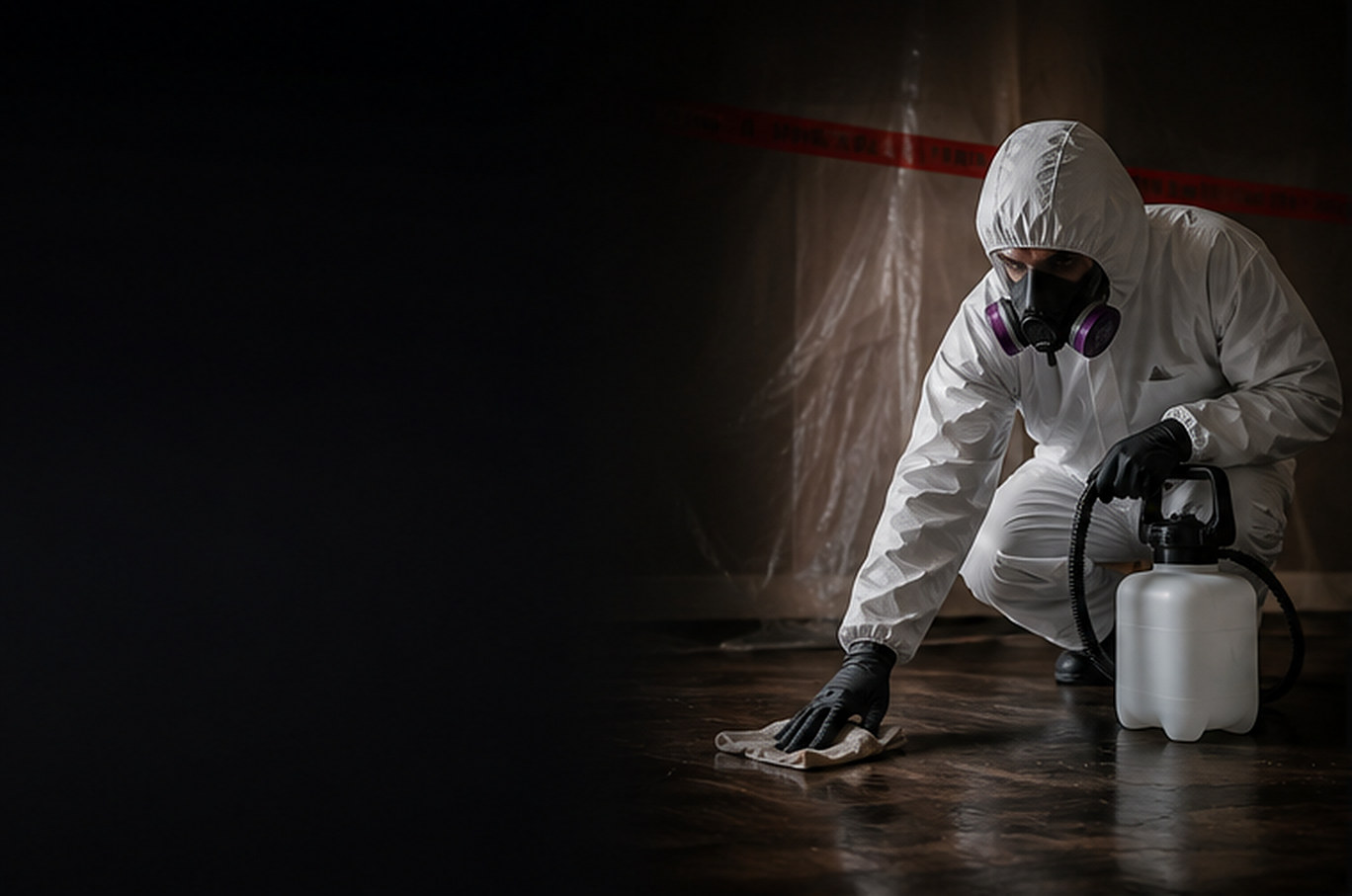
Crime scene cleanup across Nassau, Suffolk and NYC, handled once investigators release the property. No family, landlord or business owner should have to face that room. We do that work instead.
We respond only after law enforcement or the Medical Examiner has released the scene. We never enter or interfere with an active investigation.
Most people assume a public agency handles this. No agency in New York State does.
What remains is an occupational hazard, not a mess. Blood and other potentially infectious materials fall under the OSHA Bloodborne Pathogens Standard because hepatitis B, hepatitis C and other pathogens can stay viable on surfaces long after the fact, in material that is no longer visible to the eye.
Release means the investigation is finished. It does not mean the property is safe.
| Party | Responsibility | Cleans the property? |
|---|---|---|
| Police / detectives | Investigate, collect evidence, release the scene | No |
| Medical Examiner | Determine cause of death, remove the deceased | No |
| Fire / EMS | Emergency medical response | No |
| Property owner | Responsible for the condition of the property | Must arrange it |
| Critical Incident Recovery | Decontamination, disposal and reconstruction | Yes |
This is the single most common surprise families and landlords encounter. The investigation and the cleanup are entirely separate processes, handled by entirely separate parties.
Crime scene work has a specific order. Working out of sequence spreads contamination rather than removing it.
We verify the investigating agency has cleared the property and that you can authorize work.
We check under flooring, behind baseboards and inside wall cavities. Visible contamination is the starting point, not the boundary.
Sealed containment with negative air pressure keeps particulate and odor out of unaffected areas.
Porous materials are cut out, bagged and manifested as regulated medical waste.
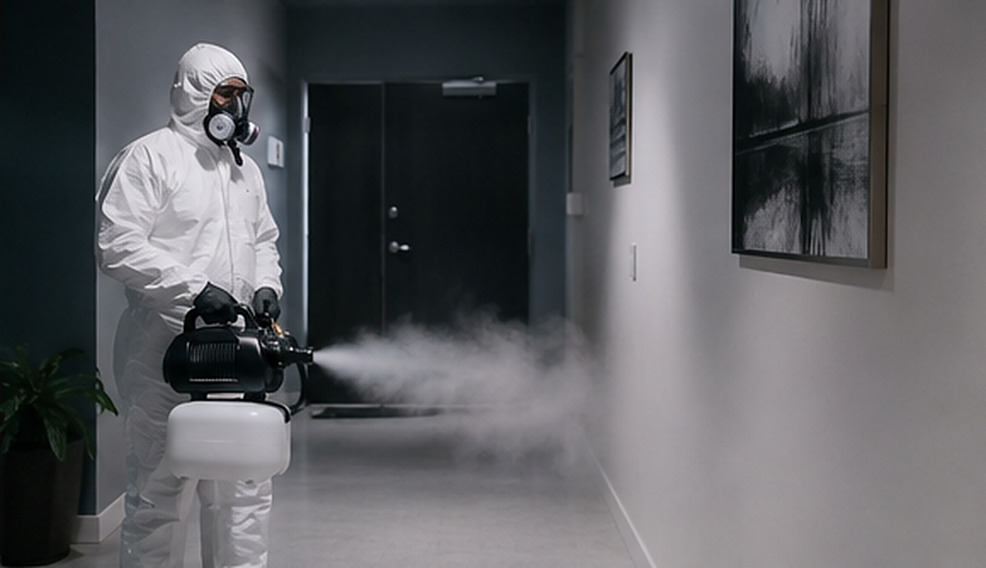
Hospital-grade disinfectant on every affected surface, print powder removal, then odor treatment at the source.
We test before calling an area clean, then reconstruct the flooring, drywall and finishes we removed.
Many homeowners and commercial policies cover biohazard remediation after a covered incident. In New York, victims of certain crimes may also be eligible for assistance through the New York State Office of Victim Services, which can include crime scene cleanup costs. Verify current terms directly with OVS.
We will not tell you your insurance will cover it, or quote a reimbursement figure. Only your carrier can make that determination. What we control is the paperwork.
Authorization and payment generally sit with the owner or management company rather than the tenant, though this depends on the lease. We work directly with Long Island property managers and can coordinate authorization with ownership.
Call as soon as you know cleanup will be needed. We can be staged and ready for the moment the scene is released.
Call 855-379-4866Larger scenes, longer investigative holds, chemical agents and multi-room contamination.
Homicide cleanup →Medical emergencies, falls and injuries where no investigation took place.
Blood cleanup →Where decomposition, odor and fluid migration are the primary concern.
Unattended death cleanup →Crews stage from central Long Island, so most addresses in Nassau, Suffolk and NYC are reachable quickly at any hour. Below are the communities we are called to most often.
Do not see your town? We cover the entire island, from the Queens border to Montauk and Orient Point, plus all five NYC boroughs.
Call 855-379-4866Call now, even if the scene is still held. We will be ready when it clears.
855-379-4866No. Law enforcement investigates, collects evidence and releases the scene. No police department on Long Island provides cleaning or decontamination. Once detectives finish, the condition of the property is the owner's responsibility.
As soon as the investigating agency or Medical Examiner formally releases the scene. We will not enter beforehand. Call as soon as you know cleanup will be needed and we can be staged and ready.
Latent print powder used to develop fingerprints. It clings to nearly every surface, smears badly if wiped with a household cloth and travels on air currents. Removal is part of our standard scope, and it usually extends beyond the room where the incident occurred.
Only where contamination has penetrated a porous material. Tile, finished hardwood, metal and glass can usually be cleaned in place. Carpet, padding, subfloor, drywall and insulation generally cannot, because the contamination is inside the material rather than on it.
In most cases, no. Between decontamination, odor treatment and reconstruction, a properly finished job leaves an ordinary room.